
AI-Powered Quality Control in Ceramic Manufacturing for Medical Implants
Technology Being Tested
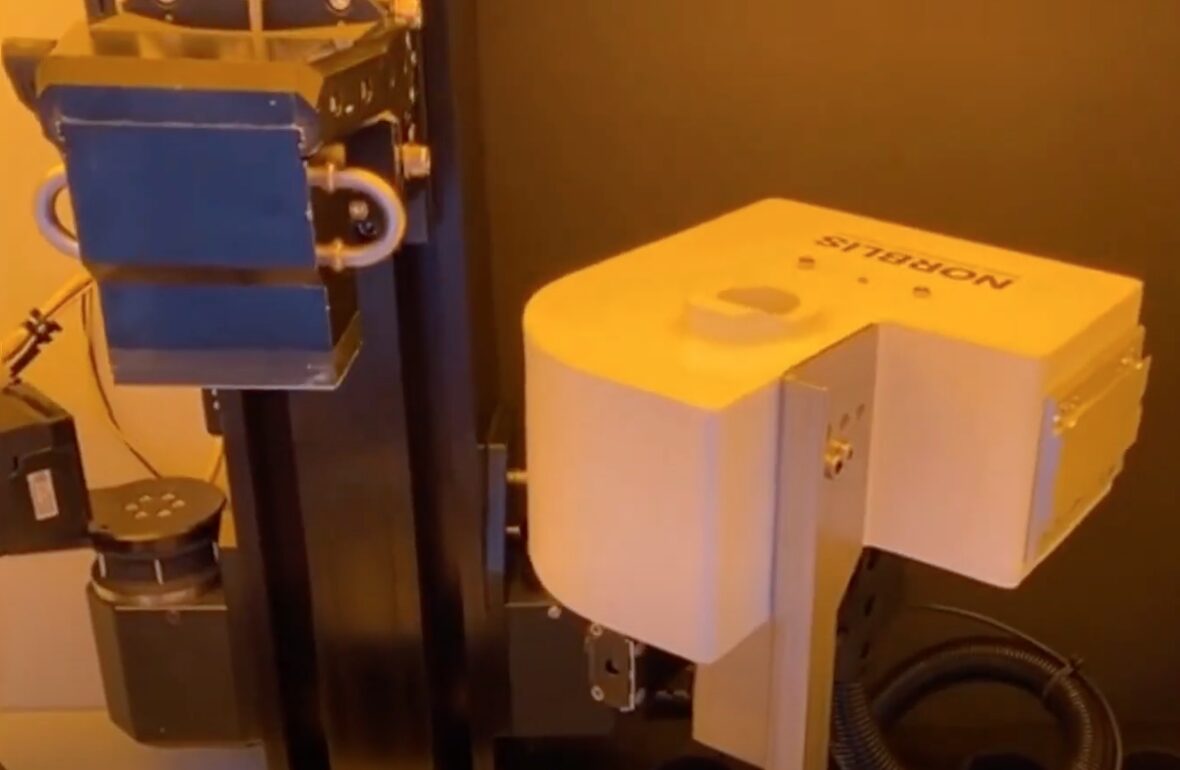
The technology tested is MIR-OCT, chosen for its advanced capabilities in additive ceramic manufacturing and coating inspections:
Real-time, non-contact, non-destructive inspection of ceramic parts.
Provides ultra-high-resolution images during production.
Detects micro-defects at early stages of manufacturing.
Significantly reduces defect-related delays, energy waste, and production costs.
This technology is critical for producing Bluetooth medical communication modules, where even microscopic imperfections in ceramic buffers can compromise performance and safety
Use case in a Nutshell
The collaboration involves three key partners, AirCode (Pilot), LITHOZ and NORBLIS (Tech providers)
Together, they tested MIR-OCT in a real production environment under the ZDZW framework. The aim was to combine AI, advanced inspection technology, and innovative manufacturing methods to achieve zero defects and zero waste in high-precision medical components.
About the collaboration partners

AirCode: reliable communication in the most challenging environments, specializing in out-of-body communication for medical applications. Its solutions support both standard medical frequencies and non-standard ones, such as Bluetooth, enabling seamless connectivity between in-vivo medical devices and smartphones.
LITHOZ: characterized by a central promise – to consistently deliver the highest quality in ceramic 3D printing and continually push the limits of ceramics development as an active partner to its customers. The company’s values, which have become the DNA of Lithoz throughout its history, underpin this commitment.

NORBLIS the premier provider of compact, broadband, mid-infrared supercontinuum fiber lasers with capabilities extending beyond 10 μm. The company envisions integrating these cutting-edge sources into solution-oriented systems tailored for applications in optical coherence tomography, infrared spectroscopy, and imaging, marking a significant stride in advancing optical technologies.
Description of the Collaboration
Challenge
Ceramic buffers used in Bluetooth medical modules are extremely sensitive to defects, as these flaws can reduce module performance and reliability in critical medical applications.
Approach
The pilot introduced MIR-OCT inspection into the lithography-based ceramic manufacturing workflow:
Early-stage scanning of parts using MIR-OCT to capture ultra-high-resolution images.
Integration with AI-powered defect detection to automatically identify micro-defects.
Real-time feedback to the production system, enabling operators to correct or discard defective pieces before they enter critical production stages.
Innovation
Combining MIR-OCT with AI analytics created an in-process quality control system that prevents defect propagation while reducing inspection time and manual interventions.
Results of the Colaborration
Yield improvement
Achieved >90% production yield.
Cost savings
Lower scrap rates led to significant cost reductions.
Sustainability
Reduced material waste and energy usage.
Higher reliability
Ensured quality for critical medical implants.
Testimonials
“In Pilot 5, together with our partners, we combined MIR-OCT inspection, lithography-based ceramic manufacturing, and artificial intelligence to catch defects before our production process reached critical stages. This enhanced our yield to over 90%, significantly boosting productivity while reducing costs and waste”
Project info:
ZDZW is a project funded by the European Union’s Horizon Europe research and innovation programme under Grant Agreement No. 101057404. With a consortium formed by 27 partners, ZDZW will develop Digitally Enhanced Non-destructive Inspection Services for globally competitive, clean, and sustainable production in European and Global Manufacturing.
Do you want to create a use case for your technology or test this technology in your processes?